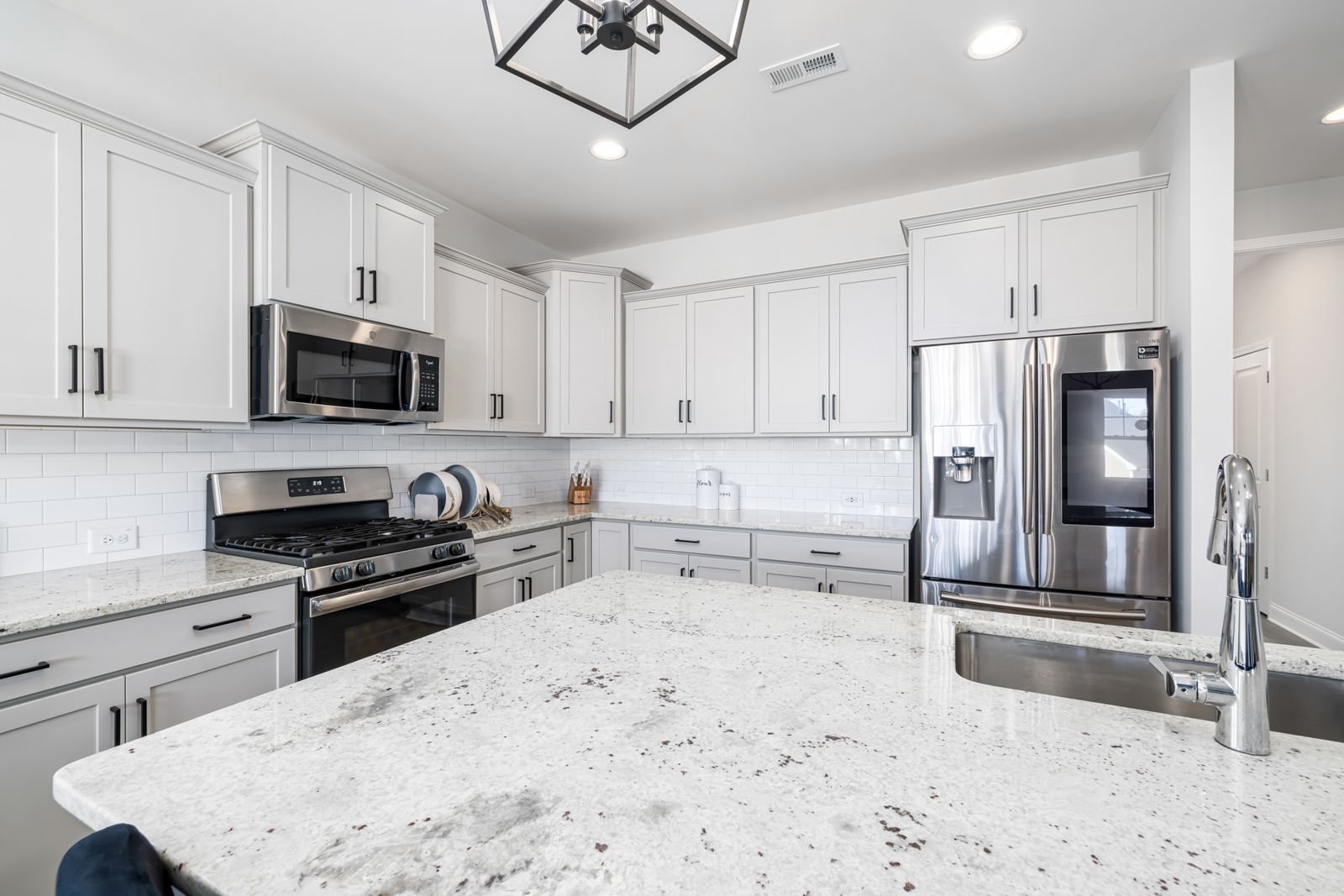
Replacing kitchen countertops is one of the few remodeling projects where the same kitchen can cost $25 a square foot or $150 a square foot and both numbers are defensible. The surface area barely changes. What changes is the material, the fabrication, and a pile of line items most homeowners never see until the quote lands.
Here is what countertop replacement actually costs in 2026, where the money goes, and how to tell a fair quote from a padded one.
What the project actually involves
A countertop replacement is a three-stage job: tear-out, templating and fabrication, then installation. Unlike painting or flooring, almost none of it happens on a schedule you control. A fabricator comes out and digitally templates your cabinets, the slab gets cut in a shop, and you wait — typically one to three weeks between template and install for stone. Laminate and butcher block skip most of that.
The other thing to understand: your countertop sits on your cabinets, and cabinets that are out of level, water-damaged, or not rated for a 400-pound slab have to be fixed first. Fabricators will not install stone on sagging cabinet boxes, and discovering this at template stage is one of the most common budget surprises on this project.
Most kitchens have between 30 and 55 square feet of countertop. A galley or small L-shape lands near 30. A larger kitchen with a full island is commonly 50 to 60. Measure your runs (length × depth, usually 25 inches) before you call anyone — it makes every quote conversation faster.
Cost by material, installed
These are national installed ranges for 2026 — material, fabrication, and labor together. They are not slab-only prices, which is how showrooms quote and how budgets get blown. We price installed ranges rather than slab-only figures for the same reason showrooms don’t – it’s the only number that matches what leaves your wallet, and the full process is in How We Estimate.
| Material | Installed cost per sq ft |
|---|---|
| Laminate | $25–$40 |
| Butcher block / wood | $50–$110 |
| Solid surface (Corian-type) | $45–$90 |
| Granite | $40–$140 |
| Quartz (engineered stone) | $50–$150 (national average $75–$95) |
Laminate is still the budget floor, and modern high-definition laminate looks dramatically better than the 1990s version. Butcher block pricing above applies to common species like maple, birch, or acacia — walnut, end-grain construction, and extra-thick tops push well past that. Solid surface is seamless and repairable with no sealing required, but it scratches and is not heat-proof. Granite’s range reflects supply: builder-grade slabs from high-inventory colors sit at the low end, and exotic or low-availability stone sits at the top. Quartz’s premium brands run to the top of its range.
For a standard 30-square-foot kitchen, a complete quartz or mid-grade granite job commonly lands between $3,500 and $7,500 all-in. That is the number to anchor on if someone asks you what countertops cost.
The line items that inflate the quote
The per-square-foot number is never the whole bill. These are the extras that show up:
- Removal and disposal of the old top: $150–$500, with about $300 being typical. Frequently quoted separately from the install.
- Sink cutouts: $100–$200 per opening for a standard drop-in. Undermount cutouts, which require polishing the exposed edge, commonly add $50–$150. A farmhouse/apron-front sink needs a specific cutout shape plus a support system and can add $200–$400.
- Cooktop and faucet-accessory holes: priced like additional cutouts, usually $100–$200 each.
- Edge profiles: a straight or eased edge is almost always included. Bullnose and half-bullnose typically add $5–$15 per linear foot. Ogee, mitered, and other decorative profiles run $15–$30 per linear foot. On 25 linear feet, that is a $375–$750 upgrade for an edge shape.
- Seams: more seams means more fabrication labor. Long runs or L-shapes that exceed slab dimensions force a seam whether you want one or not.
- Cabinet reinforcement or leveling: variable, but budget for it if your cabinets are older than you are.
- Backsplash: a 4-inch stone backsplash from the same slab is often priced per linear foot and is a genuinely cheap way to use leftover material.
Estimate your kitchen
Countertop Replacement Cost Estimator
Rough planning estimate using 2026 national installed ranges. Regional labor rates, slab availability, edge upgrades, and cabinet repairs are not included. Always get at least three local quotes.
What drives the price up — and what pulls it down
Pushes it up: exotic or low-inventory stone colors; waterfall island edges (you are buying and fabricating a whole extra slab face); thick 3cm material versus 2cm on plywood; multiple seams; farmhouse sinks; decorative edge profiles; tight urban markets with high labor rates; and any stair or elevator access that makes moving a 300-pound slab difficult.
Pulls it down: choosing from a fabricator’s in-stock remnant pile if your kitchen is small; sticking to high-volume colors; keeping the standard eased edge; reusing your existing sink; and scheduling in a slower season. Fabricators discount when their shop is quiet.
A genuinely underrated option: if your existing tops are laminate and structurally fine, the real question may be whether you need replacement at all. The same refinish-versus-replace math that governs a bathtub refinishing versus replacement decision applies here — a cosmetic problem and a structural problem have very different price tags, and it is worth being honest about which one you have.
DIY versus hiring out
Laminate and butcher block are legitimately DIY-able. Laminate post-form tops are sold in stock lengths, cut with a circular saw and a fine-tooth blade, and scribed to the wall. Butcher block needs a good sealing routine but is otherwise carpentry. Doing either yourself typically cuts the job cost by 40–60 percent, since labor is the majority of a low-material-cost install.
Stone is not a DIY project. Slab fabrication requires wet saws, CNC equipment, and two to four people to carry material without cracking it. Even homeowners who confidently handle interior painting themselves rather than hiring a pro should hire out granite and quartz — a dropped slab is a total loss, not a repair.
Sequencing matters more than people expect
If you are doing a broader kitchen refresh, countertops go in after cabinets and before backsplash tile. Flooring is the argument: installing flooring first gives a cleaner result if you ever replace cabinets, but costs more material. If your kitchen floor is hardwood and tired, price a screen-and-recoat or full sand-and-refinish before the new tops go in — sanding dust and a fresh quartz surface are not friends. Similar logic applies to any adjacent hard-surface work, like a garage floor epoxy coating: do the dusty, fume-heavy work before the finish surfaces arrive, not after.
Practical tips before you sign
- Get three quotes, and make each one itemize material, fabrication, cutouts, edge, removal, and disposal separately. A single lump sum hides where the markup lives.
- Ask to see and tag your actual slab, not a 4-inch sample. Natural stone varies enormously within a color name.
- Confirm in writing who is responsible for disconnecting and reconnecting plumbing and the cooktop. It is frequently excluded.
- Ask where the seams will fall and get it drawn on the template. Seam placement is the most common post-install complaint.
- Check whether the quote includes a 4-inch backsplash or assumes tile — the difference can be several hundred dollars.
- Verify the fabricator carries insurance covering damage to your cabinets during install.
Countertop pricing varies substantially by region, by slab availability at the moment you buy, and by how busy local fabricators are. The ranges here are national planning figures, not quotes. Get at least three local estimates on your actual measurements before you set a budget.
Leave a Reply