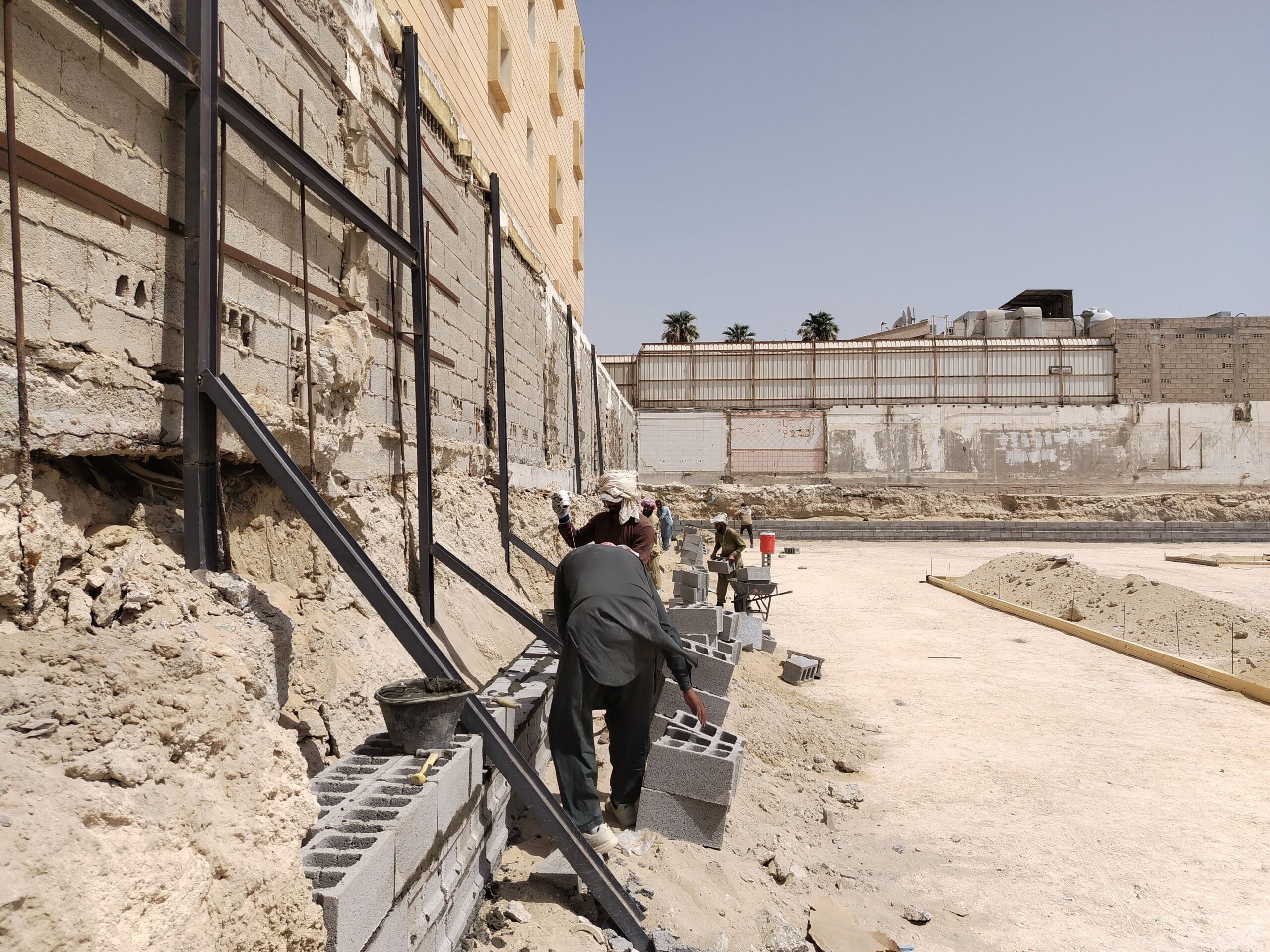
Materials and labor together run $35 to $65 per square foot of wall face for most retaining walls, though premium natural stone can push that as high as $95. If your yard has a slope that’s eating into usable space, eroding after every heavy rain, or threatening a foundation, a retaining wall is usually the fix. It’s also one of those projects where the price range homeowners see online is almost useless — “a few thousand dollars” covers everything from a low timber wall you could build in a weekend to an engineered concrete block system that needs a permit and a structural stamp. Here’s what actually goes into the number.
What a Retaining Wall Project Actually Involves
At its core, a retaining wall holds back soil on a slope so it doesn’t slump, erode, or wash out over a walkway, patio, or foundation. The work typically includes excavating a trench for the base, laying a compacted gravel footing, building the wall itself course by course (or timber by timber), backfilling with drainage-friendly gravel behind the wall, and installing a drainage pipe or weep holes so water doesn’t build up and push the wall over. Taller or longer walls also need site grading and sometimes a batter (a slight backward lean) for stability.
It’s similar in spirit to other structural exterior projects — the footing and drainage work overlaps a lot with what goes into a deck’s footing and support system, and a timber retaining wall shares material sourcing and lifespan trade-offs with a wood fence installation.
Retaining Wall Cost by Material
Professionally installed, most retaining walls run $35 to $65 per square foot of wall face (length times height), materials and labor combined. Here’s how that breaks down by material:
| Material | Installed cost per sq ft |
|---|---|
| Treated timber | $15–$35 |
| Concrete block (segmental units) | $25–$60 |
| Natural stone | $25–$60 (up to $95 for premium or imported stone) |
| Gabion (wire cages filled with stone) | $20–$45 |
Treated timber is the cheapest option upfront, but timber walls only last 10–20 years before rot sets in, especially in wet climates. Concrete block is a good middle ground — interlocking blocks are DIY-friendly for short walls and last 50–100 years. Most of the cost of natural stone is labor — fitting irregular stones by hand is slow, skilled work, so locally quarried stone keeps the budget down more than the stone itself does. Gabion cages are less common residentially but effective on steep or erosion-prone slopes.
If you’re comfortable doing the labor yourself, materials alone run much lower: roughly $5–$15 per sq ft for concrete block, $5–$10 for timber, and $8–$15 for natural stone. Professional labor adds another $10–$50 per sq ft on top, or $50–$75 per hour, depending on the crew and how difficult the site is to access.
What Actually Drives the Price Up (or Down)
Wall height is the biggest factor by far. Most jurisdictions require a permit once a wall exceeds 3 to 4 feet, and taller walls need a stamped design from a licensed structural or geotechnical engineer to make sure the wall can handle the soil pressure behind it. That engineering review typically adds $500 to $2,000, and permits run another $50 to $450 depending on your city and the wall’s size. A 2-foot decorative wall and a 6-foot retaining wall holding back a hillside are essentially different projects with the same name.
Drainage is the second-biggest factor, and it’s the one people underestimate. Poor drainage is the #1 reason retaining walls fail — water pressure builds up behind the wall and pushes it out of alignment or topples it entirely. Proper drainage (perforated pipe, gravel backfill, sometimes additional excavation to redirect water) runs about $60 to $70 per linear foot and isn’t optional on anything beyond a token garden wall.
Other cost drivers: site access (a wall in a backyard that requires hand-carrying materials through a gate costs more than one a truck can back up to), soil type (rocky or clay-heavy soil is harder to excavate), existing wall removal if you’re replacing a failing one, and length — longer walls benefit from some economy of scale but also mean more total drainage and excavation work.
Realistic Total Cost Range
Put together, the average retaining wall project costs around $6,000, with most homeowners landing somewhere between $3,200 and $9,200 depending on material, height, and site conditions. A short timber wall under 3 feet with easy access can come in well under $2,000. A tall, engineered concrete block or natural stone wall on a difficult slope can run $15,000 or more once permits, engineering, and drainage are factored in. As with most structural exterior work, actual costs vary a lot by region and contractor — get at least three quotes before committing, and make sure each one explicitly includes drainage and, if applicable, engineering and permit costs, not just materials and labor. How material, height, and site conditions combine to spread that $3,200–$9,200 range is the kind of detail covered in How We Estimate.
Estimate Your Retaining Wall Cost
Plug in your wall’s approximate length and height and pick a material to get a ballpark range. This is a rough planning estimate, not a quote — actual pricing depends on your site, region, and contractor.
Retaining Wall Cost Estimator
Practical Tips Before You Build
- Don’t skip drainage to save money. It’s the leading cause of wall failure, and fixing a collapsed wall costs far more than doing drainage right the first time.
- Check your local height threshold before you design anything. If you can keep a wall under your city’s permit trigger (often 3–4 feet) by terracing it into two shorter walls instead of one tall one, you may avoid engineering costs entirely — ask a contractor whether terracing works for your slope.
- Get it in writing. Ask each quote to break out materials, labor, drainage, and (if applicable) engineering and permits separately, so you’re comparing apples to apples.
- Think about what’s uphill and downhill. A wall retaining soil near a foundation or driveway carries more liability than a garden-bed wall, and contractors should price accordingly — don’t assume a low bid on a structural wall is a good deal.
- Pair it with other sloped-yard fixes. If erosion is the underlying problem, a retaining wall alone sometimes isn’t enough — regrading, gutter extensions, or French drains may need to be part of the plan.
As with any structural project, get at least three local quotes, confirm licensing and insurance, and don’t let anyone skip the drainage plan to hit a lower number.
Leave a Reply