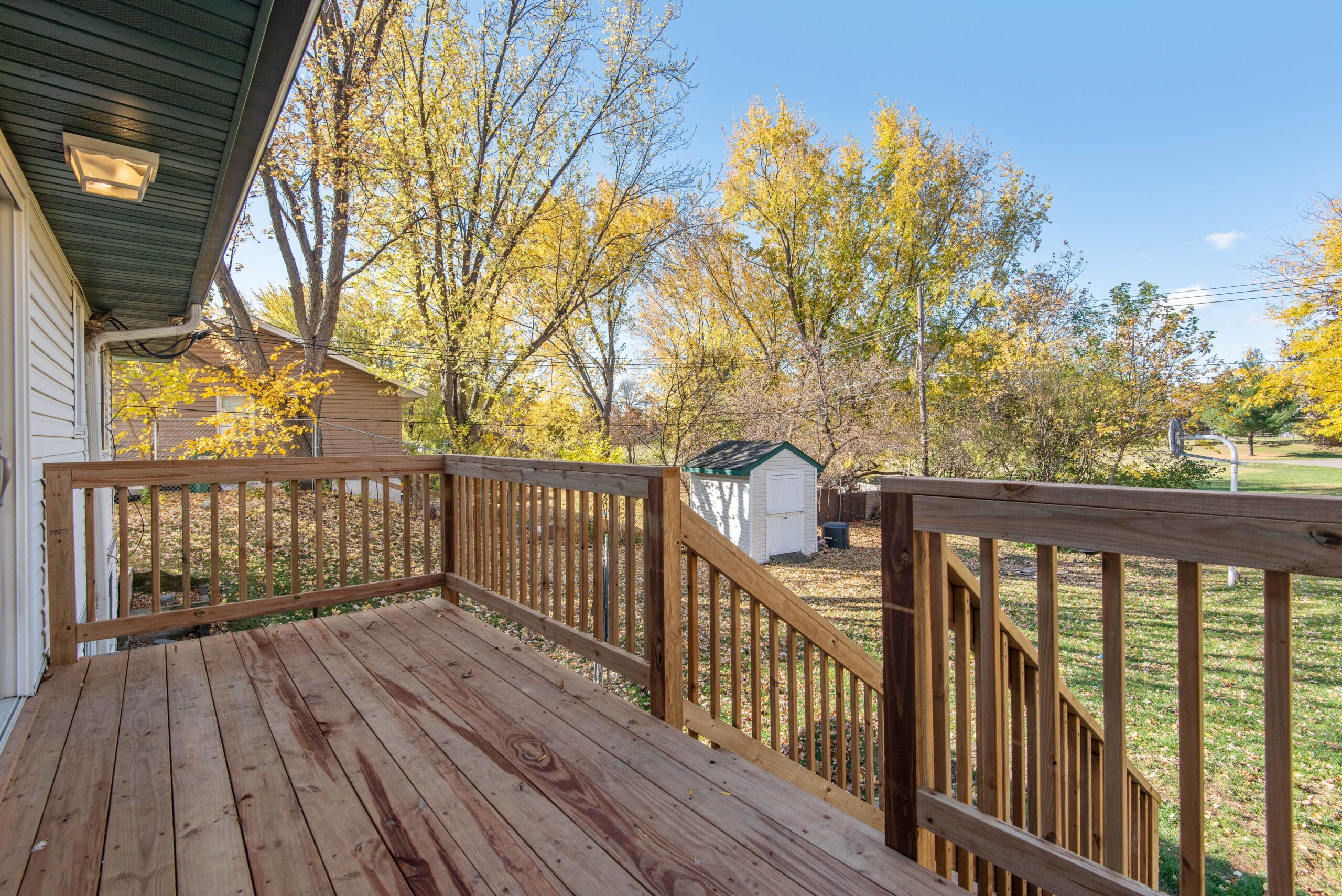
Choose pressure-treated wood and a deck installs for $15 to $25 per square foot; upgrade to composite decking and that climbs to $30 to $60, with cedar splitting the difference at $25 to $40. A new deck is one of the few home projects that pays you back twice: you get a usable outdoor room, and — unlike a lot of interior remodels — it tends to hold a decent share of its value at resale. But “how much does a deck cost” has a wide answer, because the number swings hard based on decking material, deck size, height off the ground, and how much of the substructure (footings, framing, stairs, railing) you’re building from scratch. Here’s a realistic breakdown for 2026.
What a Deck Project Actually Involves
Building a deck isn’t just laying boards. A typical project includes: concrete footings or piers to support the structure, a framed substructure of posts, beams, and joists, the decking surface itself (wood or composite boards), railing and balusters if the deck is raised, stairs if needed, and in most municipalities, a permit and at least one inspection. Skipping any of these on a raised or attached deck isn’t just a cost-cutting shortcut — it’s a structural safety issue, since footing depth, ledger attachment, and railing height are all code-regulated for a reason.
Deck Cost Breakdown
Most homeowners will land somewhere between $25 and $60 per square foot installed (materials and labor combined), with the material choice doing most of the work to move you up or down that range: How material choice moves a project up or down that $25–$60 range is the kind of variable we walk through in How We Estimate.
| Material | Installed cost per sq ft |
|---|---|
| Pressure-treated wood | $15–$25 |
| Cedar or higher-grade wood | $25–$40 |
| Composite decking (Trex, TimberTech, and similar) | $30–$60 |
Pressure-treated wood is the budget baseline — cheapest material, but expect to reseal or stain it every 1–2 years to keep it from graying and splintering. Cedar or higher-grade wood has better rot and insect resistance than pressure-treated pine. For composite decking, material alone runs roughly $16–$32 per square foot, with labor adding another $24–$48 per square foot depending on the crew and complexity — composite framing and fastening work is comparable to wood, so labor isn’t the reason composite costs more, the boards themselves are.
On top of the decking surface itself, budget for:
- Footings: $15–$40 per hole for shallow, code-minimum footings; $150–$500 per post for frost-depth footings poured below the frost line, which most colder climates require.
- Railing: $20–$40 per linear foot installed for standard wood or composite railing; premium materials like aluminum, cable rail, or glass panels run $50–$120+ per linear foot.
- Permits: typically $100–$500 depending on your municipality, plus 1–3 weeks of lead time for approval. Attached and raised decks almost always need one.
Put together, a mid-size 200–400 square foot deck typically lands in the $5,000–$20,000+ range all-in, with premium composite, elevated, or multi-level designs pushing well past that.
What Drives the Price Up or Down
A few variables explain most of the spread between a $6,000 deck and a $20,000 deck of similar size:
- Height and attachment. A ground-level, freestanding deck needs far less structural work than one attached to the house and raised above a walkout basement — more footings, deeper footings, stairs, and stronger railing all add up fast. Raising and attaching a deck typically adds 15–25% to the square-foot cost plus $800–$2,500 for the extra structure, which is how the calculator below treats it.
- Material grade. Composite costs more upfront than wood but needs no staining or sealing, so the lifetime cost gap narrows over 10–15 years. If you’re weighing that same upfront-vs-lifetime tradeoff on other surfaces in the house, it’s a similar calculation to deciding between refinishing and replacing hardwood flooring — cheaper materials or methods now often mean more maintenance later.
- Shape and features. Multi-level decks, built-in benches, pergolas, and curved edges all add labor hours that a simple rectangle doesn’t require.
- Railing and stair complexity. Longer railing runs, premium infill (cable, glass), and multiple stair sections can add thousands on their own.
- Site access and demo. Removing an old deck, working around tight side-yard access, or building on a slope all add labor time.
- Region and season. Labor rates vary significantly by market, and contractors are typically busiest — and priciest — in spring and early summer.
Decks are often just one piece of a broader backyard or exterior refresh. If you’re already budgeting for one outdoor project, it’s worth timing it alongside others — homeowners planning a deck often tackle fence installation in the same season, since both involve similar permitting and site-prep considerations, or pair it with a garage door replacement if the goal is an overall exterior refresh rather than just the backyard.
Estimate Your Deck Cost
Use the calculator below to get a rough range based on your square footage and material choice. This is a planning estimate, not a quote — actual pricing depends heavily on your region, site conditions, and contractor.
Deck Cost Calculator
Estimate only, based on 2026 national average material and labor ranges. Get quotes from local contractors for an accurate number.
Practical Tips
- Get at least three quotes. Deck-building labor rates vary more than almost any other trade — the spread between the lowest and highest bid on the same design is often 40–50%.
- Ask what’s included in “per square foot” pricing. Some contractors quote decking-surface-only pricing and bill footings, railing, and stairs separately, which can make an estimate look artificially low.
- Don’t skip the permit. An unpermitted deck can complicate a home sale later, and insurance may not cover damage or injury tied to non-compliant construction.
- Factor in maintenance, not just installation. A cheaper wood deck that needs annual staining can cost more over 10 years than a composite deck with a higher sticker price.
- Time it for shoulder season if you can. Late summer/fall or late winter bookings often come in lower than peak spring demand.
As with any of these outdoor projects, treat the ranges above as a starting point for conversations with contractors, not a final number — actual costs vary meaningfully by region, site conditions, and the specific contractor you hire, so get multiple quotes before committing.
If you’re handling this yourself, the materials are the easy part to source —
current options and pricing for deck stain and sealer
will depend on your material and the size of the job.
Leave a Reply