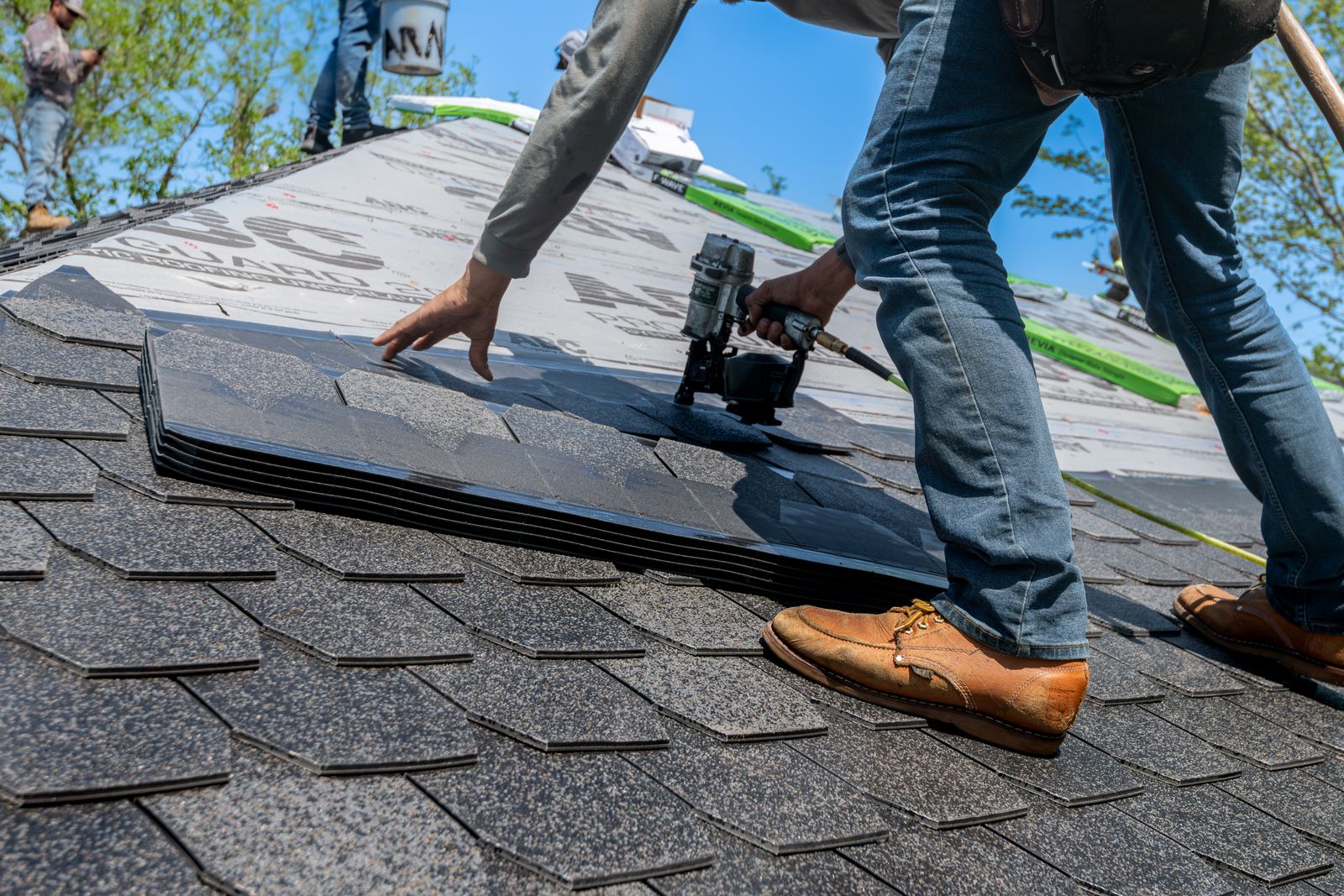
A typical asphalt shingle roof runs $8,000 to $18,000 installed; go with standing-seam metal on the same house and it jumps to $20,000 to $45,000. A roof replacement is one of the biggest single checks most homeowners write for a home improvement project — and one of the hardest to shop confidently for, since you can’t easily verify quality after the fact the way you can with, say, a new floor. The price also swings a lot more than people expect based on material choice, roof pitch, and how many layers need to come off first. Here’s a realistic 2026 breakdown.
What a Roof Replacement Involves
A full roof replacement typically includes: tear-off and disposal of the old roofing material (down to the decking, or sometimes leaving one existing layer in place if code allows), repair of any damaged decking or sheathing discovered underneath, underlayment and flashing around chimneys, vents, and valleys, the new roofing material itself, and in most areas, a permit and final inspection. Roofers price jobs in “squares” — one square equals 100 square feet of roof area — which is worth knowing since some online estimates you’ll see are quoted per square foot and others per square, and it’s easy to compare the wrong numbers by accident.
Roof Replacement Cost Breakdown
| Material | Installed cost per sq ft | Typical single-family home |
|---|---|---|
| Asphalt shingles | $3.50–$7 | $8,000–$18,000 |
| Metal roofing | $10–$21 | $20,000–$45,000 |
Asphalt shingles (the most common residential roofing material) break down further: materials alone run about $90–$180 per square (3-tab vs. architectural/dimensional shingles), or roughly $1–$2 per square foot. Labor runs about $150–$300 per square, or $2–$3 per square foot — labor typically makes up 60–70% of the total project cost, more than most other exterior projects, because of the physical difficulty and time involved. A typical single-family home has 1,700–2,500 sq ft of roof area, though larger, steeper, or more complex roofs can run higher.
Metal roofing (standing seam or metal shingle) is typically 2.5 to 3 times the cost of an asphalt shingle roof of the same size, but the material can last 50+ years versus 20–30 for asphalt, so the higher upfront cost is a long-horizon bet rather than a near-term one — the break-even against asphalt is often 40–50 years, which mostly makes sense if you plan to stay in the home long-term.
On top of the roofing material itself, budget for:
- Tear-off and disposal: $500–$1,500 for a single layer, or $1,500–$4,000 if two layers are coming off, plus local dump fees.
- Permits: typically $150–$500, required by most municipalities for a full replacement.
- Decking repair: if the tear-off reveals rotted plywood or damaged sheathing, expect an added cost per sheet replaced — this is one of the most common sources of a quote coming in higher than the original estimate.
What Drives the Price Up or Down
- Roof pitch and complexity. Steep roofs need additional safety equipment and slow the crew down; roofs with multiple valleys, dormers, or a lot of penetrations (vents, skylights, chimneys) cost more per square than a simple rectangular roof.
- Number of existing layers. Removing two or three layers of old shingles costs more in labor and disposal than removing one.
- Material choice. As shown above, this is the single biggest lever — metal, tile, and slate all cost significantly more than asphalt, though they also last longer.
- Decking condition. Rot from long-term leaks (often invisible from the ground) can add real cost once the old material comes off and the crew can see the sheathing underneath.
- Access. Roofs that are hard to reach with a dump trailer or that require extra staging add labor time.
- Region. Labor rates and material costs both vary meaningfully by market, and coastal or high-wind-code areas often require upgraded fastening and underlayment that add to the total.
A roof replacement is also a natural moment to evaluate other exterior and energy-related projects at the same time, since scaffolding and access are already in place — some homeowners use the opportunity to also handle garage door replacement or window replacement as part of a broader exterior refresh. Better attic ventilation and insulation, addressed during a re-roof, can also meaningfully improve the efficiency of HVAC systems like a mini-split heat pump, since heat loss through an under-insulated attic is one of the biggest drivers of a heating and cooling system working harder than it needs to.
Estimate Your Roof Replacement Cost
Use the calculator below for a rough range based on your roof size and material. This is a planning estimate, not a quote — get an in-person inspection and multiple quotes for accurate pricing. What the calculator cannot ask about is the condition of the decking under the old roofing; nobody sees that from the ground. How we build a range around an unknown like that is laid out in How We Estimate.
Roof Replacement Cost Calculator
Estimate only, based on 2026 national average material and labor ranges. Get an in-person inspection and quotes from local roofers for an accurate number.
Practical Tips
- Get at least three in-person quotes. Roofing is one of the trades with the widest bid spread, and a phone or online estimate can’t account for pitch, layers, or decking condition.
- Ask what happens if they find rotted decking. Get the per-sheet replacement cost in writing before work starts, so a legitimate discovery during tear-off doesn’t turn into an open-ended change order.
- Confirm the warranty covers both materials and labor. Manufacturer warranties on shingles often don’t cover installation errors — ask whether the contractor offers a separate workmanship warranty.
- Check licensing and insurance before signing anything. Roofing has a higher rate of fly-by-night contractors than most trades, especially after storm events.
- Time it outside of storm season if you can. Roofers are often booked out for months after major regional storms, and pricing tends to firm up during high-demand periods.
As with any large exterior project, treat these ranges as a starting point for contractor conversations, not a final number — actual costs vary by region, roof complexity, and the specific material and contractor you choose, so get multiple in-person quotes before committing.
Leave a Reply